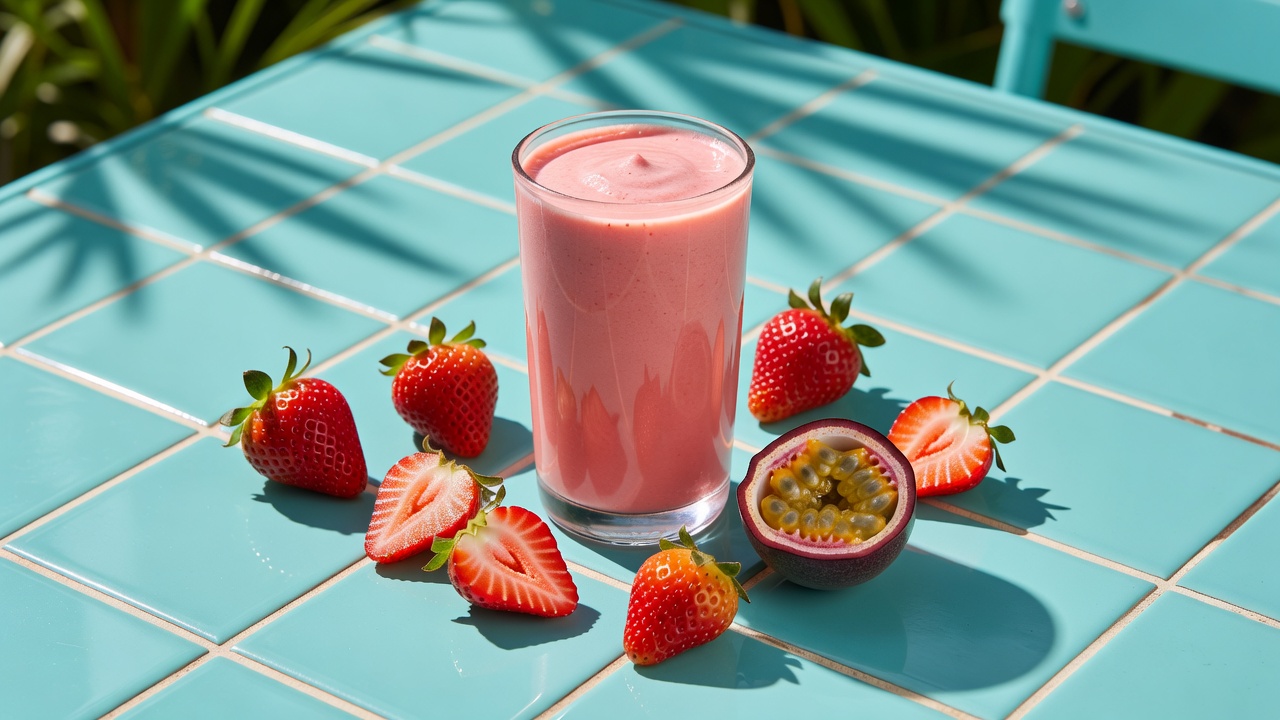
You are standing at the open fridge with about four seconds to decide, and the drinkable yogurt vs juice question is really one question: what does your body get besides the sweetness? Both drinks are cold, quick and genuinely delicious on a hot Miami morning. But one of them tends to leave you rummaging through the pantry twenty minutes later, and the other one tends to carry you to lunch. Here is an honest comparison — including the times when juice is still the right call.
Drinkable yogurt vs juice: the short answer
Juice is fruit with the fiber taken out. Drinkable yogurt is cultured milk, which means it arrives with protein, calcium and live cultures already built in. If you want something refreshing that also does a job — keeping you full, supporting your daily protein and calcium, feeding your gut some live probiotics — drinkable yogurt is doing considerably more work per ounce. If you simply want a bright, thirst-quenching splash of fruit, juice is fine and always has been. The mistake is treating them as interchangeable breakfasts. They are not.
What is actually in each glass
A glass of fruit juice is mostly water and fruit sugars, plus whatever vitamins survived the squeeze. That is not an insult — it is just what juice is. What it does not contain is meaningful protein, meaningful fat, or the fiber that was left behind in the pulp and peel. Those are the three things that slow digestion down and make a drink feel like food rather than a flavor.
A bottle of drinkable yogurt starts as milk and gets fermented by live cultures. That fermentation is the whole point: it thickens the milk, gives it that gentle tang, and leaves behind live probiotic cultures. What ends up in your glass is protein, calcium, a little fat, and those cultures — plus fruit flavor. A 7 oz YoguRico gives you 7 grams of protein and roughly 260 mg of calcium. A 7 oz glass of juice gives you essentially neither.
Protein and calcium: the biggest gap
This is where the comparison stops being close. Protein is what makes a breakfast hold. It is also the single most common thing missing from a rushed morning — a piece of toast and a glass of juice can be a nearly protein-free start to the day. Seven grams from a small bottle will not make you a bodybuilder, but it changes the shape of your morning, especially next to eggs, a bit of bread, or some fruit.
Calcium is the quieter one. Most people know they should be getting it and most people are not tracking it at all. About 260 mg in a 7 oz bottle is a real contribution to a day's worth, and it comes in a form people actually enjoy drinking — which matters more than any nutrition label, because the healthiest drink is the one that gets finished. If you are curious where your household actually lands, our calcium calculator will do the arithmetic for you in about a minute.
Sugar: it is about what comes with it
Here is the part people expect us to dodge, so let us not. Drinkable yogurt is not automatically low in sugar. Flavored yogurt drinks contain sugar, and some brands contain a lot of it. If you compare a heavily sweetened yogurt drink against plain juice on the sugar line alone, the gap can be smaller than you would guess.
But sugar never travels alone, and the company it keeps is the whole story. Sugar arriving with protein, fat and live cultures behaves differently in a meal than sugar arriving in water. That is why the honest framing of drinkable yogurt vs juice is not "one has sugar and one does not." It is: for the sugar you are drinking, what else is coming along for the ride?
It also means the flavor you choose matters. Our Natural (No Sugar Added) is the unsweetened one and the lowest in sugar of anything we make — it is genuinely tangy, and people who grew up on real yogurt tend to love it immediately. Plain is lightly sweetened, so it is mellower, but it is not the no-sugar option. And across the whole line there are no artificial sweeteners, colors, preservatives or starches, and the milk is non-GMO. What is on the label is what is in the bottle.
Live probiotics — something juice simply does not have
Every bottle of YoguRico carries live probiotic cultures, because that is what fermentation leaves behind. Juice, by its nature, has none. We are not going to tell you a yogurt drink treats, cures or prevents anything — it does not, and anyone who says otherwise is selling something. What we will say is the modest, true version: fermented foods are a pleasant way to support digestion as part of a balanced diet, and drinking one is easier for most people than remembering a supplement. If you have a specific digestive concern, that is a conversation for your doctor, not a bottle.
When juice still makes sense
Juice is not the villain of this story. A small glass of orange juice with breakfast is a pleasure, not a moral failing. Juice is genuinely useful when you want something light and sharp that will not sit heavy, when you are cooking and need acidity, when someone is unwell and simply will not eat, or when it is a hundred degrees outside and you want the least creamy thing in the fridge. The trouble only starts when a glass of juice is quietly standing in for a meal. That is the job it is worst at — and the job drinkable yogurt is built for.
How to choose a drinkable yogurt worth drinking
Not all of them are equal, so read the bottle. Look for live cultures named on the label. Check whether sugar is the first or second ingredient. Look for a real protein number rather than a vague promise. And be a little skeptical of "made with real fruit" — it is one of the loosest phrases in the dairy aisle. We will tell you exactly where we stand: real fruit purée goes into our Guava, Guanabana and Coconut. The rest of the line — Strawberry, Mango, Pineapple, Strawberry Banana, Plain and Natural — is made with natural flavors. Both are good; they are just not the same thing, and you deserve to know which one you are buying.
Making the swap in a real Miami morning
You do not need a system. Pour a 7 oz bottle instead of the juice glass two or three mornings a week and notice whether 10:30 a.m. feels different. Keep 7 oz bottles — Strawberry, Mango and Plain — in the door for lunchboxes and gym bags, and a 57 oz at the back for the household. Blend YoguRico Mango with a frozen banana when you want something closer to a smoothie. And if dairy has historically been unkind to you, our lactose-free Plain and Strawberry exist for exactly that reason.
Common questions
Is drinkable yogurt better than juice for breakfast? For breakfast specifically, yes — protein and fat make it hold in a way juice cannot. Juice is a drink; drinkable yogurt can be part of a meal.
Can I drink both? Of course. A small juice alongside a yogurt drink is a perfectly good breakfast. The point was never to ban juice.
Which has more sugar? It depends entirely on the flavor and the juice. Compare the two labels in front of you rather than trusting the category — and remember that Natural (No Sugar Added) is our unsweetened one.
Is drinkable yogurt good for kids? It is an easy way to get protein and calcium into a child who negotiates about food. For anything specific to your child's health, ask your pediatrician.
Does it need to be refrigerated? Yes — live cultures are live. Keep it cold.
Family owned, Miami made, and making drinkable yogurt since 2010 — we would rather you drink something honest than something oversold. Ready to settle the drinkable yogurt vs juice debate in your own kitchen? Find YoguRico near you and pick a flavor worth waking up for.
🥤 Goes great with our Strawberry Banana drinkable yogurt — see nutrition facts & sizes.
{# Guaranteed blog links: circular previous/next, so every post links to two others and every NEW post instantly gets inbound links from old posts. #}