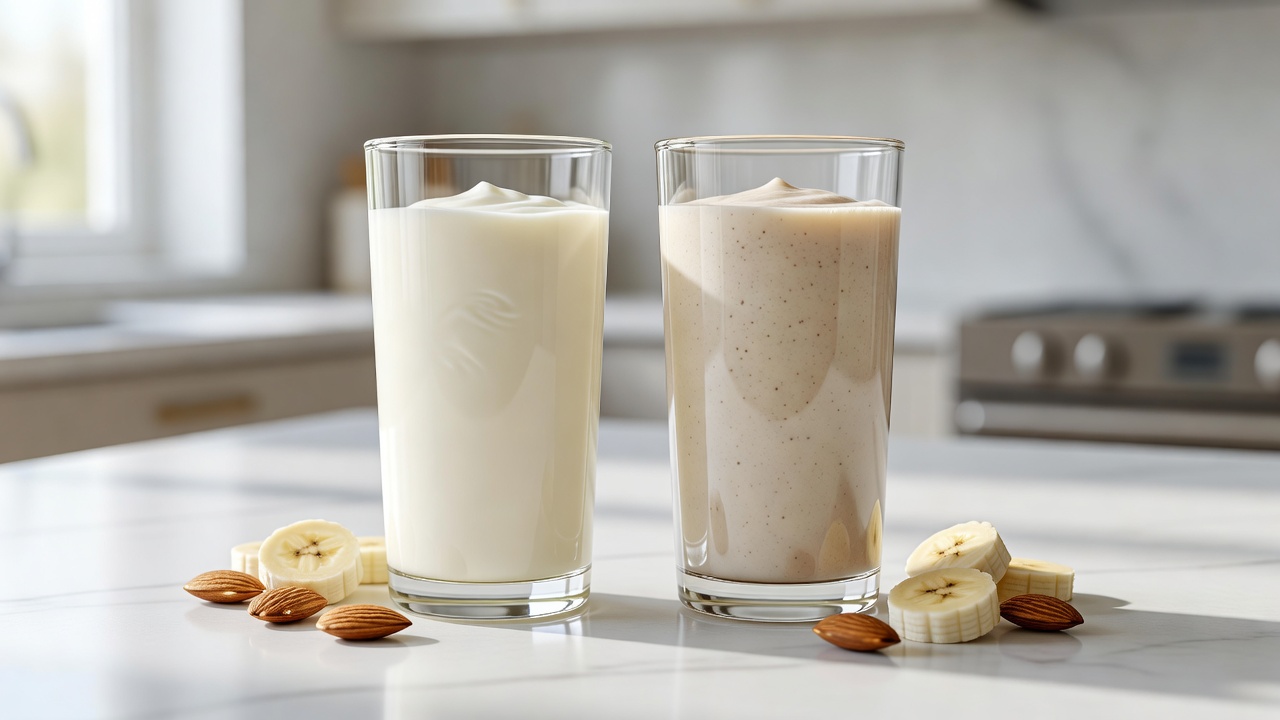
When the alarm goes off and you have ten minutes before the door, the question of drinkable yogurt vs protein shake for breakfast comes down to one thing: which one gives your body the most useful fuel in a glass you can drink with one hand? Both are popular grab-and-go choices, both deliver protein, and both beat skipping the meal entirely. But they are built very differently, and the right pick depends on your morning, your goals, and your gut. Let's break it down honestly so you can grab the right bottle without overthinking it.
What each drink actually is
A protein shake is usually a powder — often whey, casein, soy, or pea protein — mixed with water or milk, or a pre-mixed bottle engineered to hit a high protein number, frequently 20 to 30 grams per serving. Its main job is fast, concentrated protein, and many versions add isolated vitamins, sweeteners, thickeners and flavorings to make that work.
Drinkable yogurt is a real, cultured dairy food. YoguRico has been making it in Miami since 2010, and it starts with non-GMO milk fermented with live probiotics. A 7 oz serving delivers about 7 grams of protein, roughly 260 mg of calcium, and those living cultures — with no artificial sweeteners, colors, preservatives, or starches. It is food first, not a supplement built around a single macro. If you want the full picture of how it's made and what's inside, our complete guide to drinkable yogurt walks through every detail.
Protein: quantity vs quality
On raw numbers, a protein shake usually wins the protein column — that's its entire purpose. If you are trying to hit an aggressive daily protein target for muscle building, a 25-gram shake does it faster than a single serving of yogurt.
But quantity isn't the whole story. The 7 grams in a 7 oz drinkable yogurt is complete dairy protein paired with calcium, B vitamins and live cultures, all naturally present rather than added back in. For most people eating balanced meals through the day, that's plenty of morning protein. And if you want both worlds, you can blend drinkable yogurt with a scoop of protein and fruit — our smoothie builder helps you design a breakfast that lands wherever your target is.
The probiotic advantage
Here's the biggest difference, and it usually gets ignored. A typical protein shake has no live cultures. Drinkable yogurt is fermented, so it carries living probiotics that support digestion as part of a balanced diet. Starting the day with a probiotic-rich drink is an easy, pleasant way to feed your gut, something a powder simply isn't designed to do. If gut health is on your radar, see how cultured drinks fit into your routine in our blog on fermented foods and digestion.
This is why "more protein" doesn't automatically mean "better breakfast." A shake is a tool for a number. Drinkable yogurt is nourishment that does several jobs at once: protein, calcium, and beneficial bacteria in one drink.
Sugar, ingredients and what you're really swallowing
Both categories range from clean to questionable, so read the label either way. Many protein shakes lean on artificial sweeteners, gums and a long list of isolated additives to deliver flavor with low sugar. Drinkable yogurt naturally contains some milk sugar, and flavored versions add a touch more.
If you want the lowest-sugar option in our lineup, Natural (No Sugar Added) is the unsweetened choice and the healthiest pick sugar-wise. Plain is lightly sweetened — still simple, but not sugar-free. For real-fruit flavor, our Guava, Guanabana and Coconut are made with real fruit puree, while other flavors use natural flavors. The point: you can pronounce everything in a YoguRico bottle, which isn't always true of a heavily engineered shake.
When the protein shake wins
Be fair — there are mornings a shake is the smarter grab:
- You train hard and chase a high protein number. When you need 25+ grams fast, a shake gets there in one serving.
- You're fully dairy-free. A plant-protein shake covers you (though we offer lactose-free Plain and Strawberry for lactose sensitivity).
- You want a fixed calorie/macro count. Shakes are engineered for precision, which some plans require.
If muscle is your focus, run your numbers through our protein calculator first so you know how much you actually need before you over-buy powder.
When drinkable yogurt wins
For the everyday on-the-go breakfast, drinkable yogurt is hard to beat:
- You want real food, not a supplement. Cultured milk is recognizable nourishment.
- Gut health matters to you. Live probiotics are built in.
- You're feeding kids. A 7 oz bottle of Strawberry or Mango is friendly, familiar and lunchbox-ready — far easier than convincing a child to drink a clinical-tasting shake.
- You want bone-supporting calcium. About 260 mg per 7 oz adds up; see how it fits your day with our calcium calculator.
Can you have both?
Absolutely. These aren't enemies. Plenty of people use drinkable yogurt as the creamy, probiotic-rich base of a homemade shake, adding a scoop of protein powder, a banana and a handful of berries. You get the high protein of a shake plus the live cultures and real-food calcium of yogurt — the best of both columns in one glass. That blend is often the smartest answer to the whole debate.
The bottom line for busy mornings
So, drinkable yogurt vs protein shake for breakfast? If your only goal is the biggest protein number in the smallest bottle, a shake wins. If you want balanced, real-food nutrition with protein, calcium and live probiotics — and ingredients you recognize — drinkable yogurt is the everyday winner, especially for families. For most people, most mornings, a cultured drink is the more complete fuel, and you can always boost it with protein when training demands more.
Common questions
Is drinkable yogurt enough protein for breakfast? For a balanced morning alongside other foods, 7 grams per 7 oz is a solid contribution. If you need more, blend in protein powder or pair it with eggs or nuts.
Which has less sugar? It depends on the product. Some shakes are near zero using artificial sweeteners; among yogurts, Natural (No Sugar Added) is our lowest-sugar, additive-free option.
Can kids have a protein shake for breakfast? Many adult shakes aren't designed for children. Drinkable yogurt is generally a friendlier choice — and check with your pediatrician about your child's needs.
Does drinkable yogurt help digestion? Its live probiotics support digestion as part of a balanced diet, something most protein shakes don't offer.
Ready to upgrade your mornings with real, cultured nutrition? Find the flavors your family loves at a store near you with our store locator and grab a bottle of YoguRico today.
🥤 Goes great with our Strawberry drinkable yogurt — see nutrition facts & sizes.
{# Guaranteed blog links: circular previous/next, so every post links to two others and every NEW post instantly gets inbound links from old posts. #}