Drinkable yogurt vs Greek yogurt: the short answer
Both are real yogurt — milk cultured with live, active bacteria. The difference comes down to how they're processed after culturing, and that one step changes almost everything you notice: texture, protein, and how you eat it.
- Greek yogurt is strained to remove liquid whey. That makes it thick, spoonable, and high in protein.
- Drinkable yogurt is thinned to a smooth, pourable texture you sip from the bottle — no spoon, no bowl.
Neither is “better” across the board. Greek wins on protein per serving; drinkable wins on convenience and ease for kids. Here's the honest breakdown.
How each one is made
All yogurt starts the same way: real milk is warmed and cultured with live bacteria until it sets. From there:
- To make Greek yogurt, the set yogurt is strained — the watery whey is drained off. Removing whey concentrates the yogurt, so it's thicker and packs more protein into the same spoonful (and a bit less lactose).
- To make drinkable yogurt, the same cultured yogurt is simply smoothed and thinned into a pourable consistency. Nothing is strained out, so the nutrition is close to regular (non-Greek) yogurt — just in a sippable format.
So the texture difference you feel in your mouth is really a manufacturing difference: strained vs. not strained.
Side-by-side comparison
- Texture — Drinkable: smooth, pourable, sipped from a bottle. Greek: thick, dense, eaten with a spoon.
- How it's made — Drinkable: cultured yogurt thinned to a pourable texture. Greek: cultured yogurt strained to remove whey.
- Protein (typical) — Drinkable: often similar to regular yogurt, usually lower than Greek. Greek: roughly 15–20g per serving.
- Live probiotics — Both: yes, in refrigerated products with live & active cultures.
- Lactose — Drinkable: similar to regular yogurt. Greek: slightly lower (some removed with the whey).
- Convenience — Drinkable: grab-and-go, no spoon, lunchbox-friendly. Greek: needs a spoon and usually a bowl.
- Best for — Drinkable: on-the-go snacks, kids, smoothie bases. Greek: a high-protein, filling spoonable snack or meal.
Protein figures are general ranges for the category, not specific YoguRico values — always read the Nutrition Facts panel on the product you buy. For the regular-yogurt protein numbers, see our FAQ.
Protein: where Greek pulls ahead
If your single biggest goal is maximum protein per serving, Greek yogurt is the clear winner. Straining concentrates the protein, so Greek typically lands around 15–20g per serving — meaningfully more than regular or drinkable yogurt, which is thinner and usually lower.
That doesn't make drinkable yogurt a poor protein source — it's still a complete dairy protein, and it's an easy way to add some protein to a busy morning or a lunchbox. It just isn't trying to be the high-protein heavyweight. A useful rule of thumb when comparing any yogurt: look for 5g or more protein per serving and check the panel.
If you want to see how yogurt fits a child's daily target, our free Kids Protein Calculator does the math by age.
Probiotics: closer than you'd think
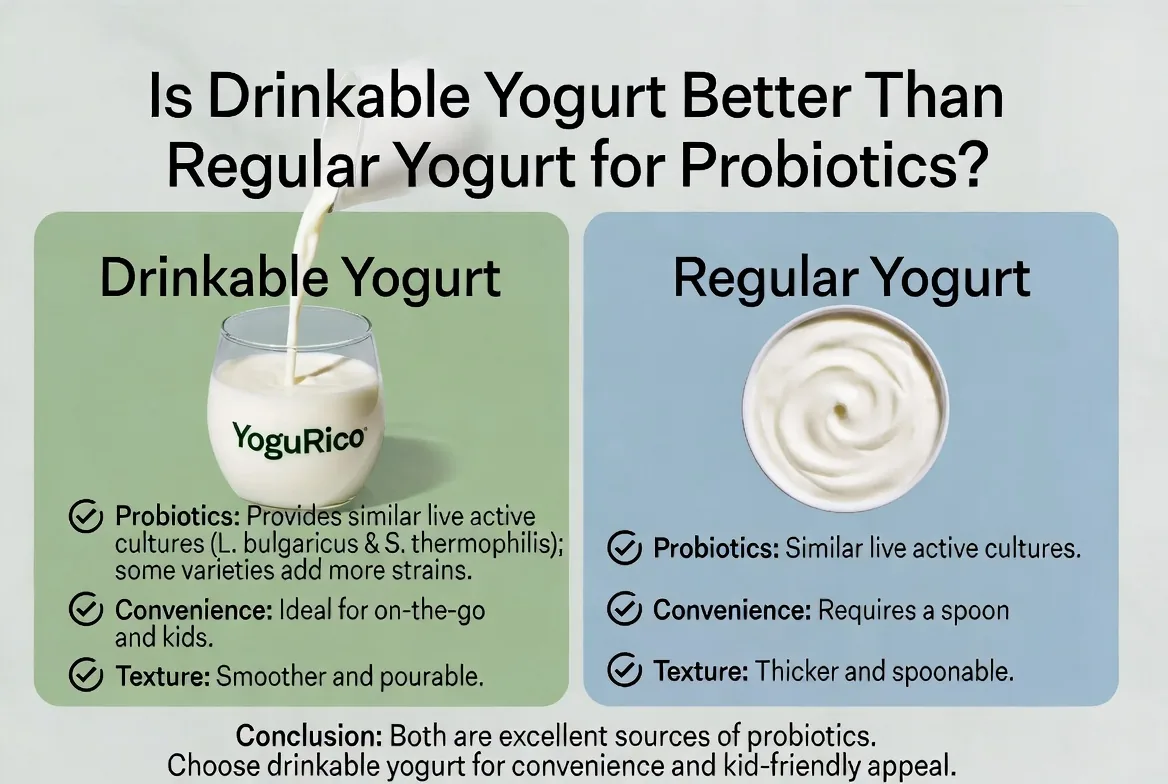
Here's the part people often get wrong: Greek isn't automatically more “probiotic” than drinkable. Both are cultured with live bacteria, and what actually matters is whether the product still has live and active cultures when you eat it.
- Refrigerated yogurts — Greek or drinkable — typically keep their live, active cultures.
- Heat-treated or shelf-stable products (of either type) may have reduced or no live cultures.
So the live-cultures question is about how a product is handled, not whether it's Greek. Look for a “Live & Active Cultures” statement and, ideally, named strains on the label. Live cultures may support digestion as part of a balanced diet. More on choosing well in our drinkable yogurt guide.
Sugar: read the label, not the category
Neither format is inherently sugary or inherently “clean.” Plain versions of both are low in added sugar; flavored versions of both can carry a lot. Two honest tips:
- Compare the added sugars line, not just total sugars (total includes natural milk lactose).
- Plain, unsweetened, and “no sugar added” options are lowest in added sugar.
Convenience: where drinkable wins
Greek yogurt needs a spoon and usually a bowl. Drinkable yogurt drops straight into a backpack or lunchbox and gets sipped one-handed — which is exactly why it's such an easy win for kids and busy mornings. It's also already a creamy smoothie base; just add fruit. A simple ratio is about ½ cup fruit per 1 cup drinkable yogurt — try our Smoothie Builder.
Which should you choose?
There's no universal winner — it depends on the moment:
- Choose Greek yogurt when you want the most protein per serving, a thick spoonable snack, or a higher-protein cooking base.
- Choose drinkable yogurt when you want grab-and-go ease, something kids will actually finish, or a ready-made smoothie base — with the same live cultures and a creamy, mild, fruit-forward sip.
Many families keep both: Greek for a filling spoonful at home, drinkable for the lunchbox and the car.
Where YoguRico fits
YoguRico is a drinkable yogurt made by a family-owned Miami company, with live and active cultures and no artificial colors, sweeteners, or preservatives. It's built for the grab-and-go side of this comparison — Strawberry, Mango, Guava, Pineapple, Coconut, Guanábana, Strawberry Banana, Plain, and Natural (No Sugar Added). Guava, Coconut, and Guanábana are made with real fruit purée.
If you're watching added sugar, the Natural (No Sugar Added) flavor has 0g added sugar; the other flavors contain added sugar, so check the label. Nutrition varies by flavor and size — always read the Nutrition Facts panel on the bottle. A lactose-free option is coming soon.
YoguRico is sold in stores across 5 states, not online. Find YoguRico near you →
This article is general information, not medical or dietary advice. For your family's specific needs, check with your pediatrician or doctor. See more recipes and tips on the blog.
🥤 Goes great with our Strawberry Banana drinkable yogurt — see nutrition facts & sizes.
{# Guaranteed blog links: circular previous/next, so every post links to two others and every NEW post instantly gets inbound links from old posts. #}